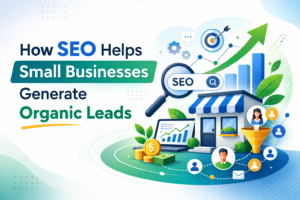
If you run a plumbing company, a dental clinic, a law firm, or any other service-based business, you already know how competitive your local market can be. People search for services near them every single day and the businesses that show up at the top of those results are the ones that win clients, not necessarily the ones with the best service.
That’s where local SEO comes in.
This guide is built specifically for service businesses that want to show up when it matters most when a potential customer is searching for exactly what you offer, right in your city or neighborhood. Whether you’re just getting started or looking to sharpen your existing strategy, this complete breakdown covers everything from the basics to the advanced tactics that actually move the needle.
At Marketingpath, we work with service businesses across industries to build sustainable local visibility that drives real leads and this guide reflects the exact principles we apply for our clients.
What Is Local SEO?
Understanding Local SEO
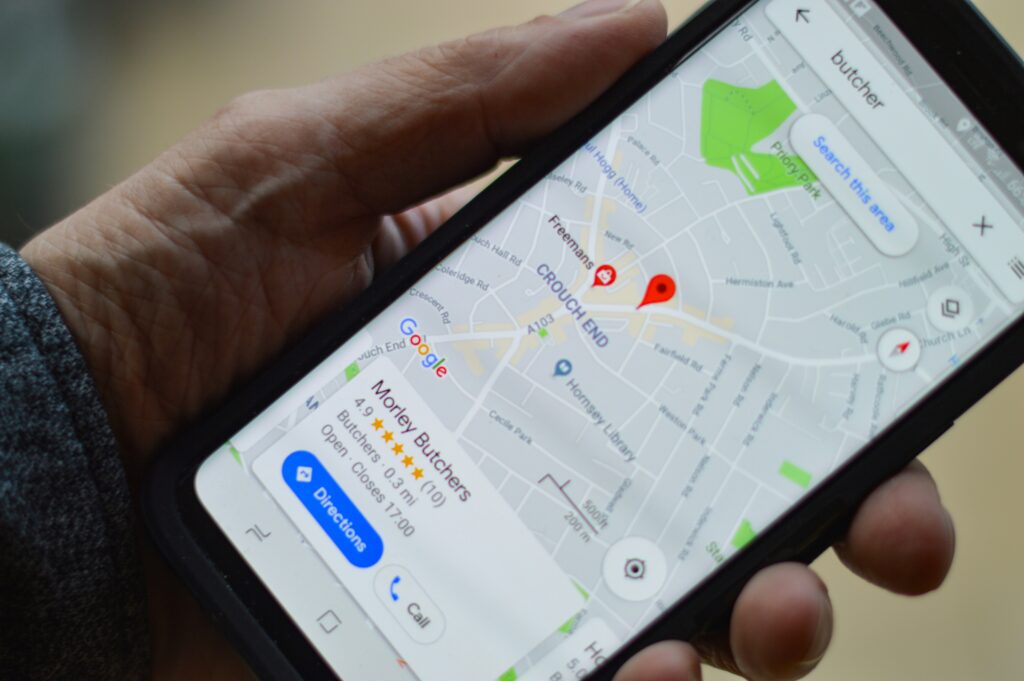
What is local SEO? In simple terms, local SEO (Search Engine Optimization) is the practice of optimizing your online presence so your business appears in location-based search results. When someone searches “electrician near me” or “best dentist in Delhi,” the results they see are shaped by local SEO signals.
Unlike traditional SEO, which targets a broad audience across regions or countries, local business SEO is hyper-focused on attracting customers within a specific geographic area typically the city, district, or region where your business operates.
Local SEO vs Traditional SEO
Traditional SEO focuses on ranking for competitive keywords at scale, building domain authority over time, and targeting audiences regardless of where they are. SEO local strategy, on the other hand, prioritizes proximity, relevance, and prominence within a defined location.
For service businesses, this distinction is everything. A roofing contractor in Pune doesn’t need to rank globally — they need to rank in Pune. Local SEO sharpens that focus.
Examples of Local Searches
- “HVAC repair in Bangalore”
- “affordable legal services near me”
- “best physiotherapy clinic in South Delhi”
- “emergency plumber open now”
These are intent-rich queries with clear geographic signals — and winning these searches is the goal of every local SEO strategy.
Why Local SEO Matters for Service Businesses
Key Benefits of Local SEO
Local SEO is one of the highest-ROI digital marketing strategies for service businesses. Here’s why:
- Qualified traffic: People searching locally are usually ready to buy or book.
- Competitive edge: Most small businesses still under-invest in local SEO, giving you room to dominate.
- Trust signals: Appearing in Google’s local pack builds instant credibility.
- Cost-effective: Compared to paid ads, affordable local SEO services deliver results that compound over time without ongoing ad spend.
Types of Service Businesses That Benefit Most
Local SEO for small business is especially powerful for:
- Home services (plumbers, electricians, HVAC, cleaners)
- Healthcare providers (dentists, physiotherapists, dermatologists)
- Legal and financial services
- Real estate agents and property managers
- Salons, spas, and wellness centers
- Contractors and construction firms
If your customers are local and you serve them face-to-face or within a defined area, local SEO is non-negotiable.
How Local SEO Works
Main Local Ranking Factors
Google uses a mix of signals to determine local rankings. The three core pillars are:
- Relevance: How well your business matches the user’s search query
- Distance: How close your business is to the searcher (or the location mentioned)
- Prominence: How well-known and trusted your business is online
How Google Decides Local Rankings
Google pulls signals from your Google Business Profile, your website, local citations, reviews, backlinks, and behavioral data (like click-through rates and calls). A local SEO company in India working on your visibility will focus on optimizing all of these layers together, because no single factor alone drives rankings.
Google Business Profile Optimization
Why Google Business Profile Is Important
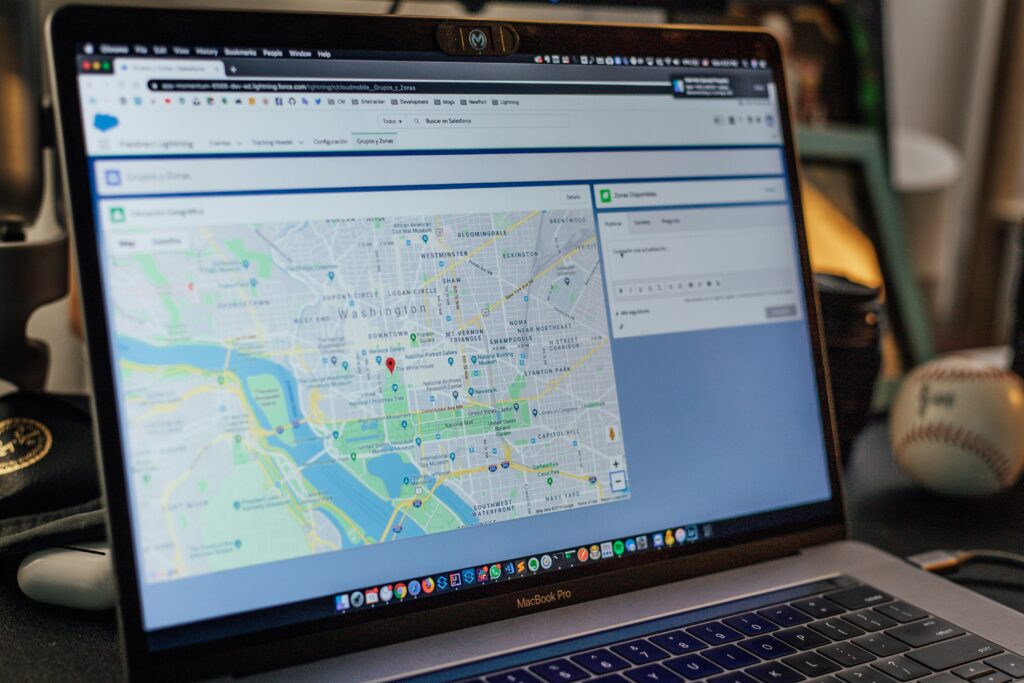
Your Google Business Profile (GBP) is the single most impactful asset in local SEO. It directly controls what appears in Google Maps results and the local 3-pack — the three business listings that show up above organic results for most local queries.
Google Maps SEO is essentially the art of optimizing your GBP to rank higher in that map pack.
How to Optimize Your Profile for Better Visibility
- Choose the most accurate primary and secondary business categories
- Write a keyword-rich, natural business description
- Add high-quality photos of your team, work, and premises
- List your services with detailed descriptions and pricing where possible
- Keep your NAP (Name, Address, Phone number) consistent
- Post updates, offers, and events regularly
- Enable messaging and respond to Q&A promptly
- Accumulate and respond to reviews consistently
Website Optimization for Local SEO
Creating a Local SEO-Friendly Website
Your website is the foundation everything else is built on. For local visibility, it needs to clearly communicate who you are, what you do, and where you serve.
Important On-Page SEO Elements for Local Search
- Title tags and meta descriptions that include your city/region and primary service
- H1 tags that reflect your core local keyword (e.g., “Professional Electricians in Hyderabad”)
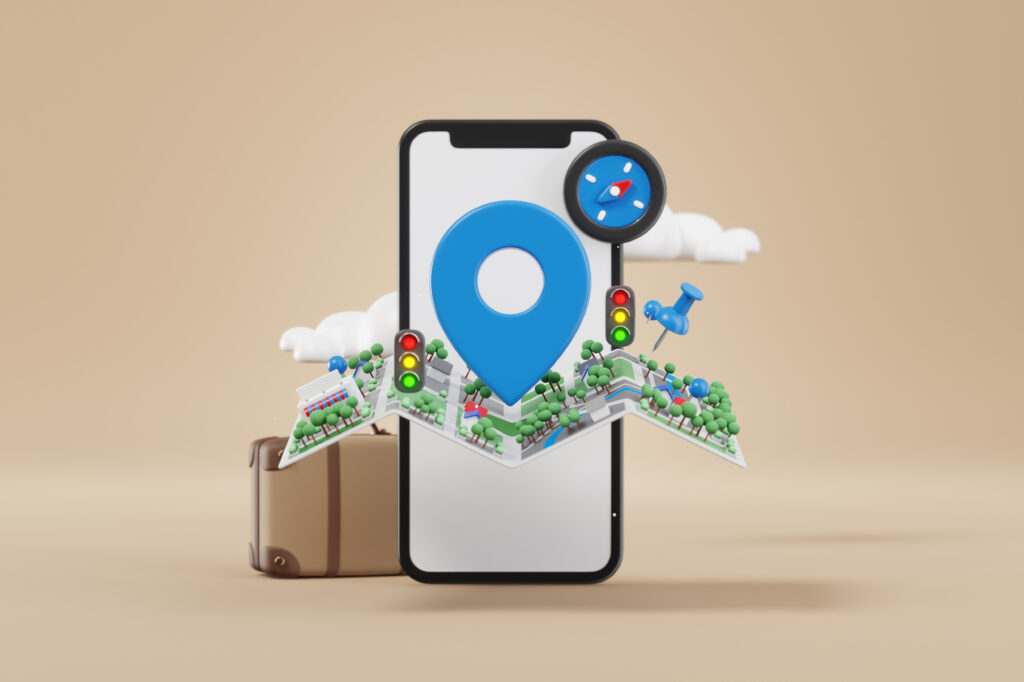
- Embedded Google Map on your contact page
- Local schema markup (more on this below)
- Mobile-first design: over 60% of local searches happen on mobile
- Fast page load times: users and Google both reward speed
- Internal linking between service pages and location pages
Creating Location Pages for Service Areas
Why Location Pages Matter
If you serve multiple cities or neighborhoods, individual location pages are essential. A single generic “We serve all of India” statement won’t cut it. Google needs location-specific content to rank you in each area.
Best Practices for Creating High-Quality Location Pages
- Create a unique page for each city or service area you target
- Include area-specific content — mention local landmarks, neighborhood names, or customer scenarios
- Avoid duplicating the same content across pages; differentiate each one genuinely
- Add localized testimonials or case studies where possible
- Optimize the URL structure (e.g., /plumber-in-mumbai/)
- Include a locally relevant CTA with a phone number or booking form
For service area businesses (SABs) that don’t have a storefront but travel to clients, location pages are even more critical since your GBP may not show a physical address.
Local Keyword Research for Service Businesses
How to Find the Right Local Keywords
Great local keyword research blends your service type, location, and hyperlocal search intent the ultra-specific intent of searchers who know exactly what they need and where they need it.
Start with seed keywords like “your service + your city,” then expand to:
- Neighborhood-level variations (“AC repair in Koramangala”)
- “Near me” and “open now” patterns
- Problem-based queries (“pipe burst fix urgently Delhi”)
- Comparison queries (“best vs affordable plumber in Noida”)
Best Tools and Sources for Local Keyword Research
- Google Search Console: see what you’re already ranking for locally
- Google Keyword Planner: find volume estimates by location
- Local SEO tools like BrightLocal, Whitespark, and Semrush’s local module
- Google Autocomplete and People Also Ask: goldmines for long-tail local ideas
- Competitor GBP listings: see what categories and terms they’re targeting
Reviews and Online Reputation Management
Why Customer Reviews Matter in Local SEO
Reviews are one of the strongest online reputation signals in local search. They influence your ranking in the map pack AND your conversion rate once someone lands on your profile. A business with 200 reviews at 4.6 stars will almost always outperform one with 15 reviews at 4.9.

How to Get More Positive Reviews
- Ask for reviews right after completing a job timing is everything
- Send a follow-up text or email with a direct link to your Google review page
- Train your team to mention reviews as part of the service close
- Make it easy: the fewer steps to leave a review, the higher your completion rate
How to Handle Negative Reviews Professionally
Never ignore or delete negative reviews. Respond calmly, acknowledge the concern, and offer to resolve it offline. A professional response to a negative review actually builds trust with future customers reading your profile.
Local Citations and NAP Consistency
What Are Local Citations?
A local citation is any online mention of your business’s name, address, and phone number even without a link. Citations appear on directories like Justdial, Sulekha, IndiaMart, Google, Yelp, and hundreds of niche industry platforms.
Why NAP Consistency Is Important
NAP consistency keeping your Name, Address, and Phone number identical across every listing signals trust and accuracy to Google. Conflicting information (different phone numbers, variations in address formatting) can suppress your local rankings.
Best Business Listing Platforms for Service Businesses
- Google Business Profile
- Justdial, Sulekha, IndiaMart (India-specific)
- Yelp, Facebook, Bing Places
- Industry-specific directories (Practo for health, UrbanClap/Urban Company for home services)
Local Link Building Strategies
Why Local Backlinks Matter
Links from other locally relevant websites tell Google you’re an established, trusted entity in your area. A link from a local newspaper, a chamber of commerce, or a regional blog carries far more local SEO weight than a random national directory link.
Effective Ways to Build Local Links
- Sponsor local events or charities and request a mention on their website
- Get listed by local business associations or trade groups
- Write guest posts for local blogs or news publications
- Partner with complementary (non-competing) local businesses for co-referrals
- Earn press coverage by sharing a unique local story or data
Content Marketing for Local SEO
Why Content Helps Local SEO Performance
Content is how you capture informational searches, build topical authority, and keep visitors on your site longer all signals that support your local rankings over time.
Local Content Ideas for Service Businesses
- “How to choose the right [service] provider in [city]”
- Seasonal tips relevant to your service area
- Local project spotlights or case studies
- Guides addressing common local problems (“Monsoon plumbing issues in Mumbai”)
- Neighborhood-specific service pages or blog posts
Technical SEO for Local Service Businesses
Mobile Optimization
Your site must be fully responsive. Google uses mobile-first indexing, and most local searches happen on smartphones. A poor mobile experience directly hurts both rankings and conversions.
Page Speed and Core Web Performance
Slow pages lose visitors and rankings. Compress images, use a fast hosting provider, minimize render-blocking scripts, and aim for Core Web Vitals scores in the “Good” range — especially LCP (Largest Contentful Paint) and CLS (Cumulative Layout Shift).
Local Schema Markup
Implement LocalBusiness schema on your website to help Google understand your business type, service area, hours, and contact details. For service area businesses, use the ServiceArea property within your schema.
Indexing and Crawlability
Ensure your location pages, service pages, and blog content are crawlable and indexed. Use Google Search Console to monitor coverage issues and submit your sitemap regularly.
Common Local SEO Mistakes to Avoid
- Inconsistent NAP across listings
- Ignoring your Google Business Profile after the initial setup
- Creating location pages with duplicate, thin content
- Not responding to reviews (positive or negative)
- Targeting irrelevant or overly broad keywords
- Forgetting to optimize for mobile users
- Neglecting local link building entirely
- Failing to track results and iterate
How to Measure Local SEO Success
Important Local SEO Metrics to Track
- Google Business Profile views, calls, and direction requests
- Local keyword rankings (especially in the map pack)
- Organic traffic from local queries (via Search Console)
- Review count and average star rating
- Citation accuracy score
- Conversion rate from location pages
Best Tools for Monitoring Local SEO Performance
The best local SEO tools for ongoing monitoring include:
- BrightLocal: citation tracking, rank monitoring, reputation management
- Whitespark: citation finder and local rank tracker
- Google Search Console: search performance data
- Google Business Profile Insights: profile engagement data
- Semrush or Ahrefs: backlink analysis and keyword tracking
Working with the best local SEO company for your category means having someone who not only sets these up, but interprets the data and adjusts the strategy accordingly.
Local SEO for Businesses Without a Physical Storefront
If you operate as a service area business — a mobile dog groomer, a home renovation contractor, a tutor who visits clients — you can still rank locally without listing a physical address publicly.
In your GBP, select “I deliver goods and services to my customers” and set your service radius. Create location pages for each city or area you serve, build citations for your SAB, and optimize your profile with service-specific descriptions. Your rankings may rely more on your website and citations than on map proximity, but strong optimization absolutely works.
Future Trends in Local SEO
- AI-powered local search: Generative AI summaries in Google are already surfacing local businesses in new ways — structured data and clear content will become even more important.
- Voice search optimization: Queries like “OK Google, find a plumber near me” are growing — conversational content and FAQs help capture these.
- Hyperlocal targeting: Hyperlocal search intent — searches for specific neighborhoods or micro-locations — will continue to grow as users become more specific in their queries.
- Video for local visibility: Short-form video on GBP and YouTube is increasingly influencing local discovery.
- Zero-click searches: More users are getting answers directly from GBP panels, making complete and optimized profiles more valuable than ever.
Conclusion
Local SEO isn’t a one-time task — it’s an ongoing investment in your visibility, credibility, and growth within your market. For service businesses, it’s one of the most direct paths from digital presence to phone calls and booked jobs.
From setting up a complete Google Business Profile, building NAP consistency across directories, earning local backlinks, and publishing location-specific content — every piece works together to build a local presence that compounds over time.Whether you’re handling it in-house or partnering with a trusted team like Marketingpath, the key is starting with the right strategy and staying consistent. Local SEO rewards businesses that show up, stay accurate, and serve their customers well both offline and online.
FAQ
What is local SEO for service businesses?
Local SEO for service businesses is the process of optimizing your online presence to rank higher in location-based search results. It helps service providers like plumbers, electricians, and healthcare professionals get discovered by nearby customers who are actively searching for their services.
How long does local SEO take to show results?
Most businesses start seeing meaningful improvements within 3 to 6 months of consistent local SEO work. Competitive markets or businesses starting from scratch may take longer, but early wins like GBP optimization can produce results within weeks.
Is Google Business Profile necessary for local SEO?
Absolutely. Your Google Business Profile is the most powerful tool in local SEO. Without a fully optimized GBP, it’s nearly impossible to appear in Google Maps results or the local 3-pack.
Can I do local SEO without a website?
A website significantly strengthens your local SEO, but you can still gain some visibility through your GBP and directory listings without one. However, for competitive markets and long-term results, a well-optimized website is essential.
How do reviews help local SEO?
Reviews are among the strongest online reputation signals for local rankings. They influence both your position in the map pack and the likelihood that searchers will click and convert. Quantity, recency, and quality of reviews all matter.
What are local citations in SEO?
Local citations are online mentions of your business name, address, and phone number (NAP) across directories, review platforms, and websites. Consistent citations across trusted platforms signal legitimacy and accuracy to search engines.
Does local SEO work for home-based businesses?
Yes. Home-based businesses can still optimize their Google Business Profile as a service area business, build location pages, earn citations, and gather reviews — all without listing a home address publicly. Many home-based service providers rank competitively with the right local SEO strategy in place.